 Advanced
Professional Weathering Techniques for Model Train Rolling Stock
Transform brand-new models into realistic, weathered trains with these proven techniques
Why Weathering Transforms Your Railroad
Brand-new model trains look exactly like what they are—models. Real railroad equipment spends years exposed to weather, cargo, and hard use. Weathering bridges this gap, transforming toys into miniature replicas of working equipment.
The Weathering Effect
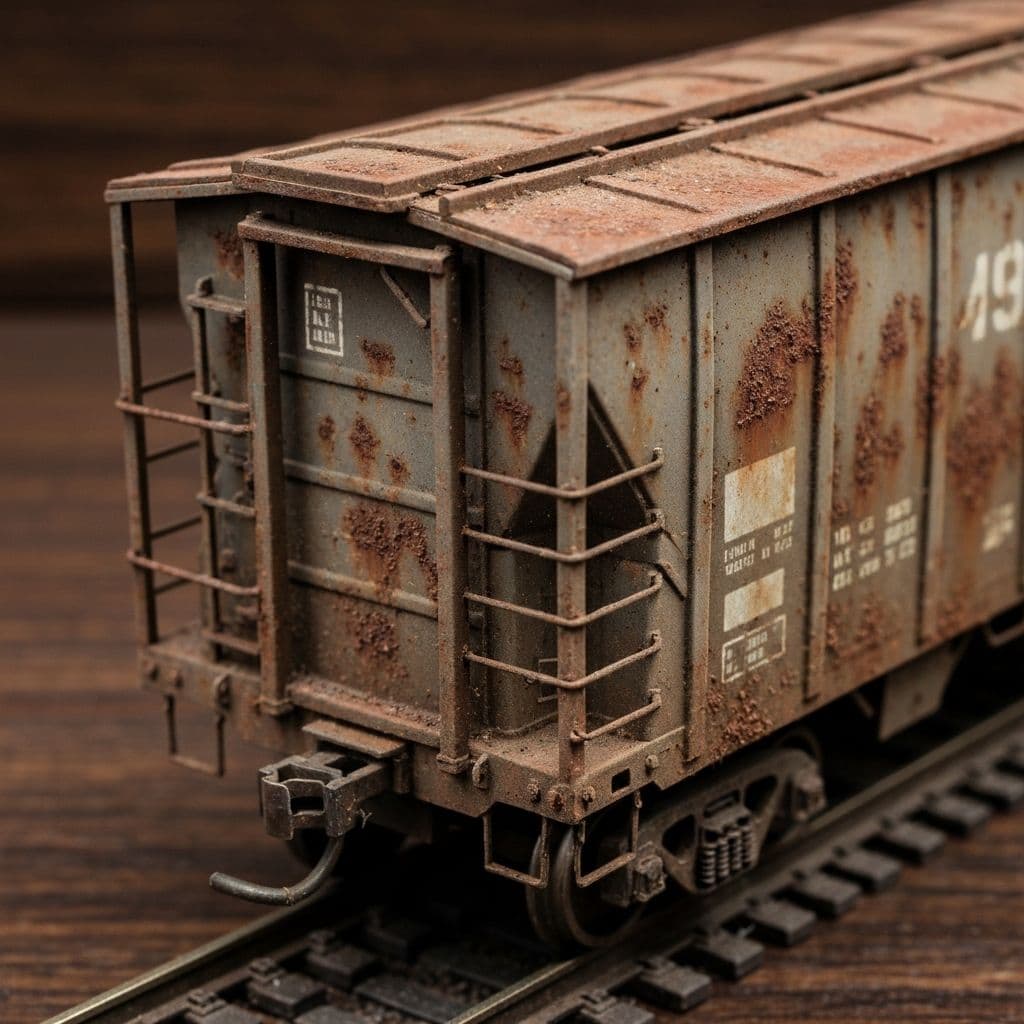
Compare photographs of factory-fresh models to prototype railroad equipment. Real trains show: - Dust and grime accumulation - Rust from moisture and cargo - Faded paint from sun exposure - Oil stains from bearings and wheels - Physical wear on high-traffic areas
Weathering reproduces these effects, making your models indistinguishable from scale photographs of real equipment.
Levels of Weathering
Not all equipment weathers equally:
Light Weathering:
Recently painted or well-maintained equipment - Subtle dust and brake dust - Minor wheel splash - Appropriate for passenger equipment and unit trains
Medium Weathering:
Typical revenue equipment - Accumulated grime - Some rust streaks - Faded lettering - Most common weathering level
Heavy Weathering:
Old or neglected equipment - Significant rust - Heavily faded paint - Missing or illegible lettering - Use sparingly for impact
Matching Your Era
Equipment weathering should match your modeled era: - Steam era: Heavy coal soot, general grubbiness - Transition era: Mix of steam-era dirt and cleaner diesels - Modern era: Graffiti becomes significant, cleaner overall
The Value of Restraint
Beginning weatherers often overdo it. Observe these principles: - Less is more—you can always add more - Weathering should be invisible at arm's length - Individual pieces shouldn't scream for attention - Consistency across your fleet matters
MODELTRAINS.AI's blog showcases appropriately weathered models across eras and levels, providing reference for your projects.
Preparation and Essential Materials
Proper preparation ensures weathering looks realistic and lasts. Gather materials before starting, and always practice on inexpensive models first.
Model Preparation
Before any weathering, prepare your model:
- . Clean thoroughly: Remove fingerprints, mold release, and dust with isopropyl alcohol
- . Fix loose parts: Glue any loose details, repair broken components
- . Apply flat coat: Weathering won't adhere to glossy paint. Spray Testors Dullcote or similar flat clear coat
- . Let cure: Wait 24 hours after flat coating
Essential Weathering Supplies
Acrylic Washes:
- Pre-made (Vallejo, AK Interactive) or mix your own - Browns, blacks, rust colors - Thin consistency for flowing into details
Weathering Powders/Pigments:
- Dry pigments for dust and rust effects - Apply with soft brush - Seal with flat coat
Oil Paints:
- Long working time for blending - Thin with odorless mineral spirits - Earth tones and black
Acrylic Paints:
- Quick drying for detail work - Craft paints work fine - Rust, brown, tan, black
Brushes:
- Soft flats for powders - Round brushes for detail - Old brushes for drybrushing
Masking Materials:
- Low-tack tape for protecting details - Liquid mask for complex areas
Airbrush (Optional but Valuable):
- Enables smooth, consistent effects - Essential for fade effects - Requires compressor and basic setup
Protective Supplies:
- Nitrile gloves - Ventilation for solvents - Drop cloth for workspace
Building Your Skills
Start with inexpensive cars—freight cars from starter sets or cheap hobby shop acquisitions. Practice techniques before applying to valuable models.
Keep notes on what works: - What products you used - How much you diluted washes - What worked and what didn't
This reference helps replicate successful effects on future projects.
Wash and Stain Techniques
Washes flow into panel lines, rivets, and details, emphasizing them while adding overall grime. This fundamental technique transforms even simple models.
Understanding Washes
A wash is highly diluted paint that flows by capillary action into recesses. The pigment settles into crevices as carrier evaporates, creating shadows and highlighting detail.
Mixing Effective Washes
For acrylics: - 5-10% paint to 90-95% water/medium - Add drop of dish soap to break surface tension - Use flow improver for smoother results
For oils: - Small amount of paint to mineral spirits - Consistency like dirty water - Longer working time than acrylics
Commercial Wash Products
Several companies make excellent ready-to-use washes: - AK Interactive: Wide range of specialized washes - Vallejo: Consistent quality, good color range - Tamiya Panel Line Accent: Excellent for details
Applying Washes
- . Load brush: Dip brush, touch to paper towel to remove excess
- . Touch to detail: Let wash flow into recesses naturally
- . Work in sections: Complete one area before moving to next
- . Remove excess: While wet, wipe high surfaces with clean brush or cloth
- . Let dry completely: Don't rush—drying reveals final effect
- . Repeat if needed: Build effects gradually
Targeted Wash Applications
Different areas benefit from different washes:
Underframes:
Heavy black/dark brown wash emphasizes trucks, brake gear **Car sides:** Subtle overall grime wash followed by specific streaking **Roof walks/Hatches:** Heavy grime accumulation **Grab irons/Ladders:** Light rust stain suggests handling wear
Streak and Stain Effects
Create vertical streaks representing rain-washed grime: 1. Apply wash at top of car side 2. Draw downward with nearly dry brush 3. Vary streak length and intensity 4. Concentrate near seams, hatches, doors
Pin Washes
For precise detail emphasis: 1. Use fine-pointed brush 2. Apply wash only to specific details 3. Clean up with small brush dampened in water 4. Excellent for rivets, hinges, grab irons
Dry Brushing and Pigment Application
While washes darken recesses, dry brushing highlights raised edges and surfaces. Combined with weathering pigments, these techniques create convincing wear patterns.
Dry Brushing Fundamentals
Dry brushing deposits paint only on raised surfaces: 1. Load brush with paint 2. Wipe most paint off on paper towel 3. Brush should leave almost no mark on paper 4. Lightly drag across model surface 5. Paint catches only on raised edges
Dry Brushing Applications
Edge Highlighting:
- Use slightly lighter shade of base color - Emphasizes edges, rivets, seams - Creates impression of wear
Rust Effects:
- Orange-brown on edges where paint chips - Build from dark (old rust) to bright (fresh rust) - Concentrate on exposed steel areas
Dust Accumulation:
- Tan/earth tones over running gear - Light gray for road dust - Apply with soft brush in direction of travel
Choosing Dry Brush Colors
- For faded paint: Slightly lighter version of base
- For rust: Orange, rust brown, dark brown
- For dust: Tans, earth tones, concrete gray
- For grease/oil: Dark brown, black
Weathering Pigments
Dry pigments create dust, rust, and grime effects impossible with paint:
Application Methods:
- . Dry application: Dip brush in pigment, tap off excess, brush onto model
- . Fixed application: Apply, then seal with flat coat or fixative
- . Wet application: Mix with alcohol or acrylic medium, apply as paint
Pigment Use Cases:
- Trucks/Underframes: Heavy brake dust, road grime
- Wheel faces: Rust, brake dust accumulation
- Rooflines: Dust accumulation
- Coupler pockets: Grease, rust
Creating Rust Effects
Convincing rust uses multiple techniques:
- . Paint rust base color (dark brown/red)
- . Add lighter orange-rust patches
- . Apply rust pigments for texture
- . Edge with bright orange for fresh rust
- . Streak with wash for rain effects
Texture and Dimension
Pigments add physical texture missing from paint alone: - Build up in logical accumulation areas - Vary density across surface - Leave clean areas where wear would occur - Seal when satisfied (or leave unfixed for subtle effect)
Airbrush Techniques and Finishing
Airbrush weathering creates smooth, consistent effects impossible with brushes. While not essential, airbrush skills dramatically expand your weathering capabilities.
Airbrush Setup for Weathering
You don't need an expensive airbrush for weathering: - Brush type: Dual-action internal mix preferred - Compressor: Any hobby compressor with moisture trap - Pressure: 15-20 PSI for most weathering - Paint thinning: Milk consistency or thinner
Fade Effects
Sun fades paint over time. Recreate this with airbrush:
- . Mix base color with white (30-50% white)
- . Thin to very transparent consistency
- . Spray lightly on horizontal surfaces (roofs, hood tops)
- . Build slowly—multiple light coats
- . Leave vertical surfaces darker
Overall Grime
General dirty appearance: 1. Mix dirty brown/gray 2. Thin heavily—nearly transparent 3. Spray overall, heavier on lower half 4. Creates uniform "been in service" look
Exhaust Staining
Diesel exhaust creates black staining: 1. Use thinned black 2. Aim from exhaust location backward 3. Fade out with distance from source 4. Keep subtle—heavy application looks wrong
Road Grime on Trucks
Spray accumulated road dust: 1. Earth tone/tan mix 2. Spray upward at underframe 3. Heavier in wheel splash areas 4. Blend with car body above
Masking for Clean Areas
Some areas stay clean: - Recent repairs - Protected locations - Areas cleaned for inspection
Use low-tack tape or liquid mask to preserve clean spots.
Clear Coating
Finish all weathered models with flat clear coat: 1. Seals all previous work 2. Unifies finish 3. Protects weathering effects 4. Multiple light coats preferable
Photographing Your Work
Document your weathering: - Natural or balanced lighting - Solid backgrounds - Include before/after - Share on the MODELTRAINS.AI blog
Final Tips
- Work in batches—weather several similar cars together
- Step back frequently—fresh perspective reveals issues
- Study prototype photos constantly
- Join communities—feedback improves skills
MODELTRAINS.AI's community includes experienced modelers who share techniques and provide constructive feedback on weathering projects.
Frequently Asked Questions
What is the best weathering technique for beginners?
Start with acrylic washes. They're forgiving, water-cleanup, and create immediate dramatic effects. Apply a brown or black wash over your model, let it flow into details, then wipe excess from flat surfaces. Practice on inexpensive freight cars.
Do I need an airbrush for weathering model trains?
No, excellent weathering is possible with brushes, washes, and dry pigments. However, an airbrush enables smooth fade effects and overall grime that's difficult to achieve otherwise. It's a valuable tool but not essential for starting.
How do I create realistic rust effects on model trains?
Build rust in layers: dark brown base, medium rust color, bright orange for fresh rust. Use weathering pigments for texture. Apply heavier rust where water collects (bottom edges, around rivets) and where paint would chip (corners, handles).
Should I seal weathered models with clear coat?
Yes, always finish with flat clear coat. It seals and protects your weathering, unifies the finish, and allows handling without damaging your work. Use multiple light coats rather than one heavy coat.