 Beginner
Getting Started with HO Scale: The Complete Beginner's Guide
Complete beginner's guide to starting your first HO scale layout from scratch
What is HO Scale and Why Choose It?
HO scale, representing a ratio of 1:87, stands as the most popular model railroad scale worldwide. The name "HO" derives from "Half O," as it is approximately half the size of O scale trains. This scale offers an exceptional balance between detail and practicality that makes it ideal for both newcomers and veteran hobbyists alike.
Why HO Scale Dominates the Hobby
The popularity of HO scale isn't accidental. At 1:87 proportion, HO scale trains are large enough to showcase impressive detail—you can see individual rivet heads, grab irons, and intricate paint schemes—while remaining small enough to fit meaningful layouts in typical home spaces. A 4x8 foot table can accommodate a respectable HO layout with multiple industries, a small yard, and scenic elements.
The economics also favor HO scale. Because it's the most popular scale, manufacturers produce the widest variety of locomotives, rolling stock, structures, and accessories. This competition keeps prices reasonable and ensures you'll find models of almost any prototype railroad you're interested in, from Union Pacific's modern fleet to vintage steam-era equipment.
How HO Compares to Other Scales
- N Scale (1:160): Smaller trains allow for longer runs and more track in the same space, but detail suffers and handling tiny couplers can frustrate beginners.
- O Scale (1:48): Larger trains with excellent detail, but requires significant space and budget.
- G Scale (1:22.5): Outdoor garden railways—beautiful but expensive and weather-dependent.
For most beginners, HO scale represents the "Goldilocks zone" of model railroading. MODELTRAINS.AI's layout planning tools are optimized for HO scale, making it easy to design your dream layout before purchasing a single piece of track.
Choosing Your First Train Set
Your first train set purchase sets the foundation for your entire hobby experience. Making the right choice now will save you frustration and money down the road.
RTR vs. Kit Sets
Ready-to-Run (RTR) sets come with everything you need to get trains running immediately: a locomotive, several cars, a power pack, and a loop of track. Major manufacturers like Bachmann, Kato, and Athearn produce quality starter sets ranging from $150 to $400.
For beginners, we strongly recommend RTR sets because: - Immediate gratification—you'll have trains running within an hour - All components are designed to work together - No specialized tools or skills required to start
What to Look For in a Starter Set
- . DCC-Ready or DCC-Equipped Locomotives: Even if you start with DC power, DCC-ready locos can be easily upgraded later. This future-proofs your investment.
2. Quality Track: Look for nickel-silver rail, not steel. Nickel-silver conducts electricity better and doesn't rust. Brands like Kato Unitrack or Atlas snap-track are excellent choices.
3. Adequate Power Supply: A good starter pack should include at least a 1-amp power pack. For DCC, look for systems with 2+ amps.
4. Prototype Accuracy: Choose a railroad that interests you. Whether it's modern diesels, classic steam, or regional railroads, your enthusiasm will sustain the hobby.
Recommended Starter Sets for 2026
- Bachmann Empire Builder (DCC): Excellent value with DCC included, around $350
- Kato Unitrack Starter Set: Superior track quality, easy setup, around $200
- Athearn Genesis Starter: Higher-quality locomotives, around $400
MODELTRAINS.AI's AI assistant can help you choose the perfect set based on your interests, space, and budget. Simply describe what you're looking for, and get personalized recommendations.
Essential Tools and Materials
Building a model railroad requires specific tools, but you don't need to buy everything at once. Start with the essentials and expand your toolkit as your skills develop.
Must-Have Tools for Day One
- . Track Cleaning Supplies
- - Bright Boy track eraser ($8)
- - Isopropyl alcohol and lint-free cloths
- - Track cleaning car (for continuous maintenance)
2. Basic Hand Tools - Needle-nose pliers - Small Phillips and flathead screwdrivers - Wire strippers (for eventual wiring) - Hobby knife with #11 blades
3. Adhesives and Fasteners - Wood glue for benchwork - Foam-safe adhesive for scenery - Track nails or adhesive caulk
4. Measurement and Planning - Flexible ruler or tape measure - NMRA track gauge (ensures correct track spacing) - Graph paper for initial sketches
Tools to Add Later
As you progress, consider investing in: - Soldering station for reliable electrical connections - Pin vise and drill bits for adding details - Airbrush for weathering and painting - Hot wire foam cutter for terrain shaping
Where to Buy
Local hobby shops offer expertise and immediate availability, though prices may be higher. Online retailers like ModelTrainStuff and TrainWorld offer competitive pricing with wider selection. Amazon carries basic supplies but often lacks specialized items.
Pro tip: Use MODELTRAINS.AI's planning tools to design your layout first. This helps you understand exactly what track, turnouts, and materials you'll need before spending money.
Understanding Track Planning Fundamentals
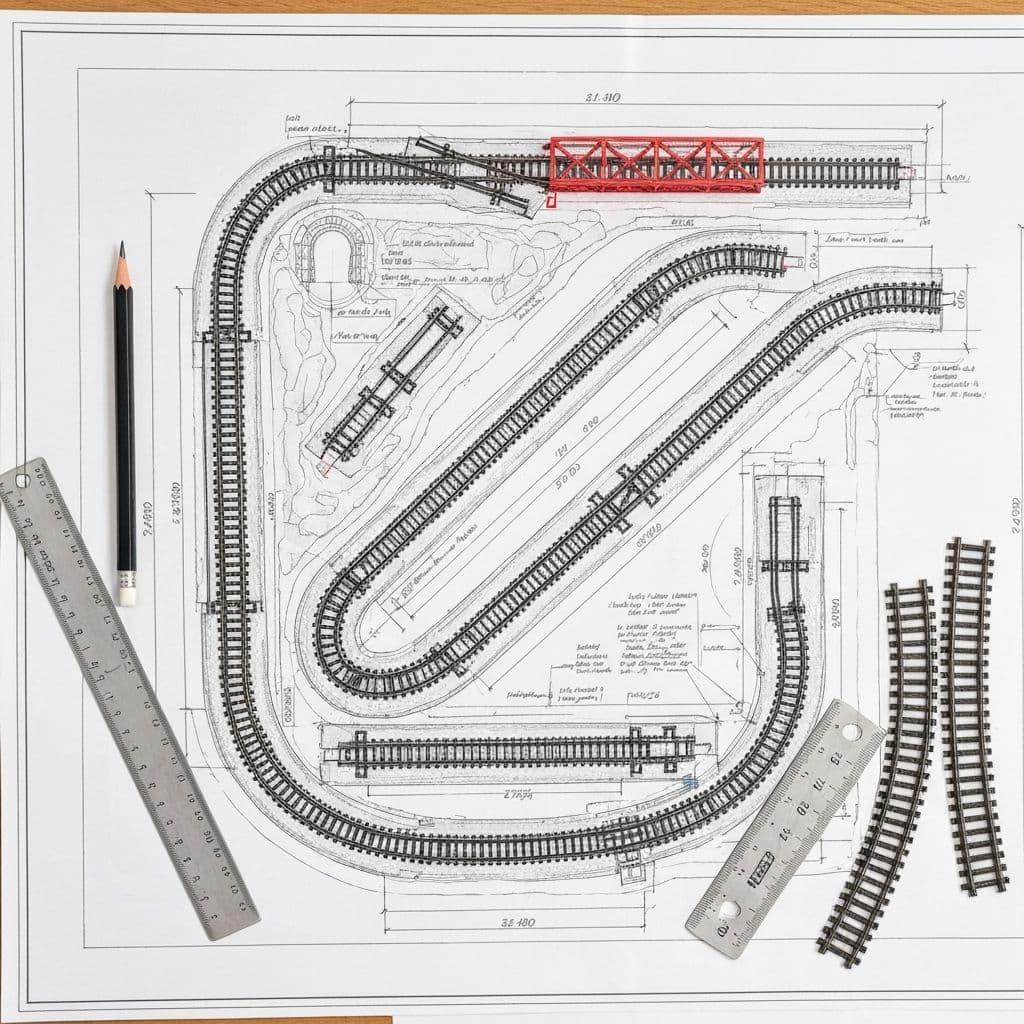
A well-designed track plan transforms a collection of trains into a functioning railroad. Even simple layouts benefit from thoughtful planning.
The Four Elements of Every Track Plan
- . Mainline: The primary running route where trains spend most of their time. Should be the smoothest, most reliable trackage on your layout.
2. Passing Sidings: Allow trains to pass each other, essential for realistic operations with multiple trains.
3. Industrial Spurs: Connect to industries where cars are loaded and unloaded. These create operational interest—purpose for moving freight.
4. Staging/Storage: Off-scene areas where trains wait between runs, creating the illusion of a larger railroad.
Minimum Radius Guidelines for HO Scale
Track curves are measured by radius—the distance from the center to the rail. Tighter curves look sharper and limit what equipment can run smoothly.
- 18" radius: Minimum for most HO equipment, common in starter sets
- 22" radius: Recommended minimum for reliable operation
- 24" radius: Allows modern long cars and most steam locomotives
- 28"+ radius: Ideal for prototypical appearance and smooth operation
The MODELTRAINS.AI Advantage
Our AI Layout Assistant revolutionizes track planning. Simply input your available space dimensions, preferred era and railroad, and operational preferences. The AI generates optimized track plans that maximize operational interest while respecting practical constraints like minimum radius and grade limits.
The traditional approach requires studying dozens of track plan books and manually calculating clearances. MODELTRAINS.AI does this automatically, producing professional-quality plans in minutes instead of weeks.
Common Beginner Layout Types
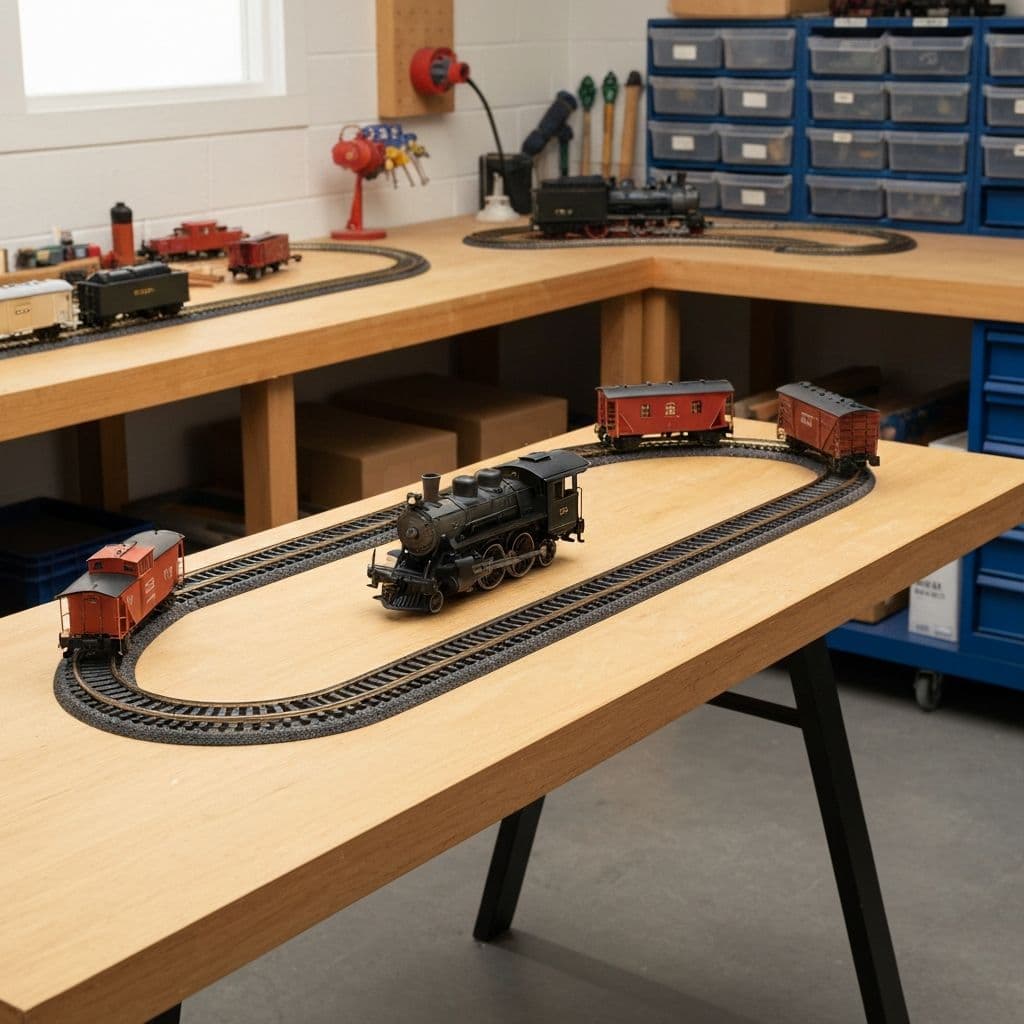
- Oval with Siding: The classic starting point, great for learning
- Figure-8: Adds visual interest with an overpass
- Point-to-Point: More realistic operations, trains go somewhere
- Around-the-Room: Uses wall space efficiently for longer runs
Setting Up Your First Layout
With tools gathered and a plan in hand, it's time to bring your railroad to life. Follow these steps for a successful first setup.
Step 1: Prepare Your Surface
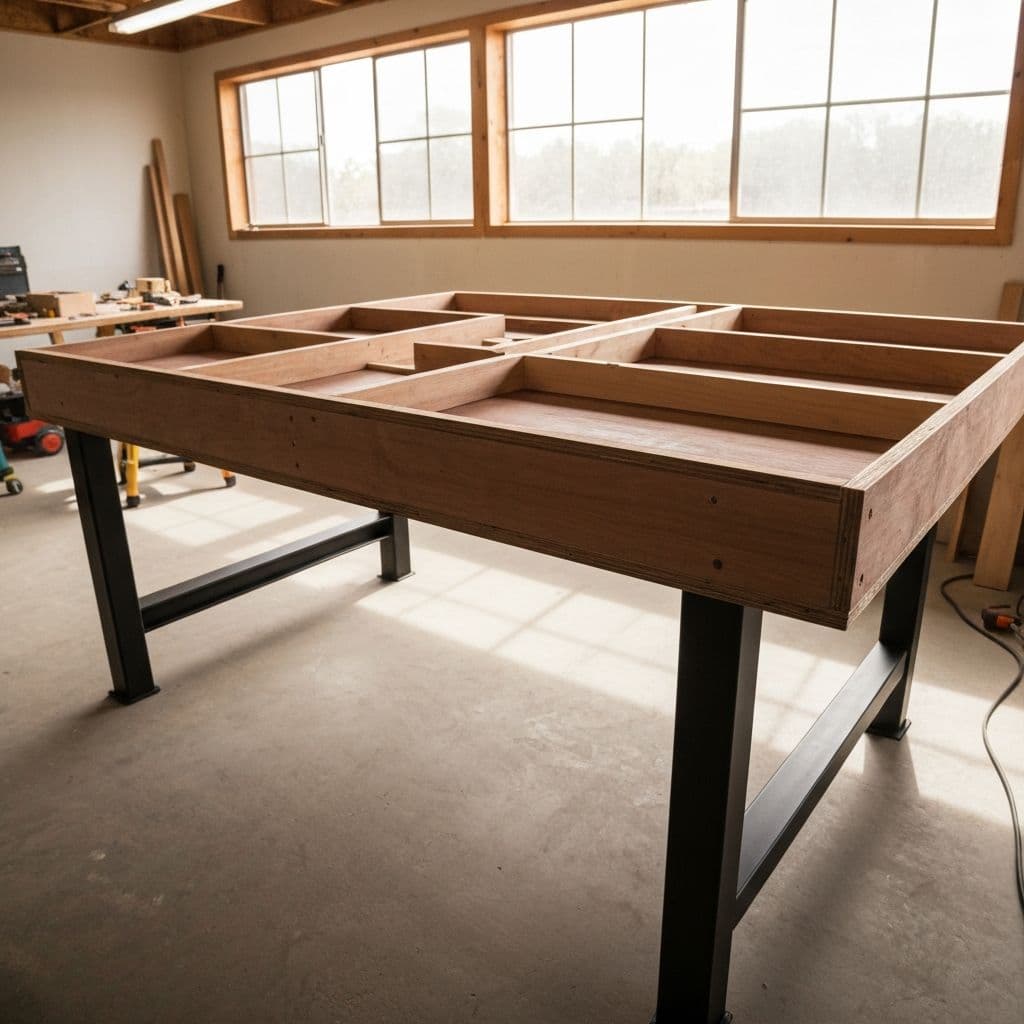
For initial experimentation, a 4x8 sheet of plywood or foam board works well. Place it on sawhorses or a sturdy table at a comfortable working height (typically 40-44 inches for standing operation).
Ensure the surface is: - Level (use shims if necessary) - Clean and dust-free - Large enough for your planned track with 3" clearance from edges
Step 2: Lay Out Track (Don't Fasten Yet)
Arrange your track pieces according to your plan, but don't secure them initially. This dry-fit allows you to: - Verify everything fits as planned - Test train operation on the bare track - Make adjustments before committing
Connect track joiners carefully—align rails precisely to prevent derailments at joints.
Step 3: Test Operations
Before fastening track, run trains for at least 30 minutes: - Watch for spots where trains hesitate or derail - Listen for unusual sounds indicating poor track joints - Verify turnouts throw completely and route correctly
Step 4: Secure the Track
Once satisfied with operation, secure track using: - Track nails (traditional, allow removal) - Adhesive caulk (flexible, absorbs vibration) - Foam roadbed with glue (best for noise reduction)
Step 5: Wire for Power
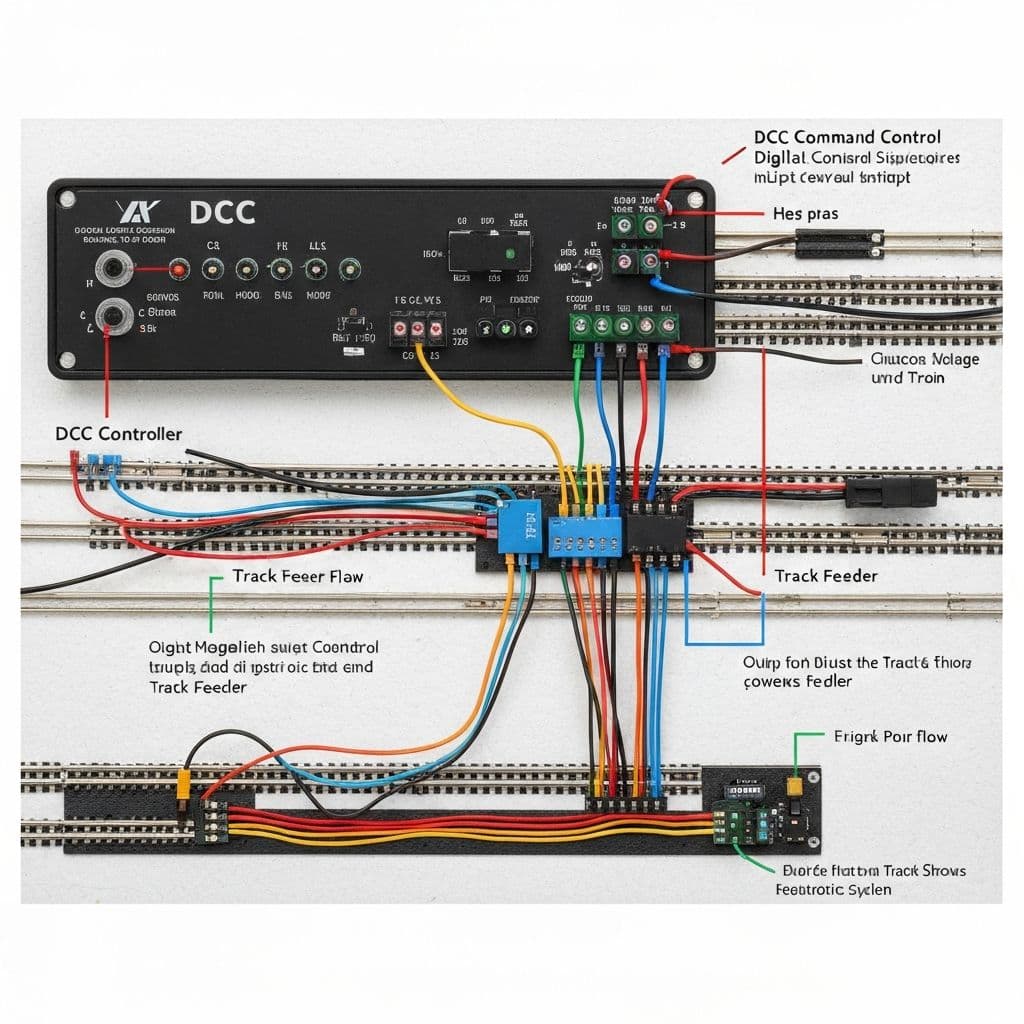
Even a simple oval needs proper wiring: - Connect power pack to track using terminal joiners or soldered feeders - For layouts larger than 4x8, add feeder wires every 3-6 feet - Use 18-20 gauge wire for main bus, 22 gauge for feeders
Step 6: Initial Operations
Congratulations! Run your trains and enjoy. As you operate, note: - Areas needing scenic development - Operational improvements you'd like - Additional equipment you want
MODELTRAINS.AI's blog showcases hundreds of layouts and projects from first-time builders to master modelers. Explore for inspiration and see how others started their journey.
Frequently Asked Questions
What is the best HO scale train set for beginners?
For beginners, we recommend DCC-equipped sets like the Bachmann Empire Builder or Kato Unitrack starter sets. These provide quality components and future upgradeability. Budget $200-400 for a quality starter set that will grow with your hobby.
How much space do I need for an HO scale layout?
A minimum of 4x8 feet provides space for a basic oval with sidings. However, even a 2x4 foot shelf layout can create engaging operations. MODELTRAINS.AI's layout planner can optimize any space you have available.
Is HO scale better than N scale for beginners?
HO scale is generally better for beginners because the larger size makes handling easier, detail is more visible, and the selection of products is widest. N scale is better if space is severely limited.
How much does it cost to start an HO scale layout?
A basic starter setup costs $300-500 including a train set, basic tools, and a simple layout surface. Budget $1,000-2,000 for a more complete first layout with scenery and multiple trains.